✨ Bhagavad Gita for Kids Chapter 16 — Good vs Bad Qualities
दैवी और आसुरी गुण — सही रास्ता कैसे चुनें
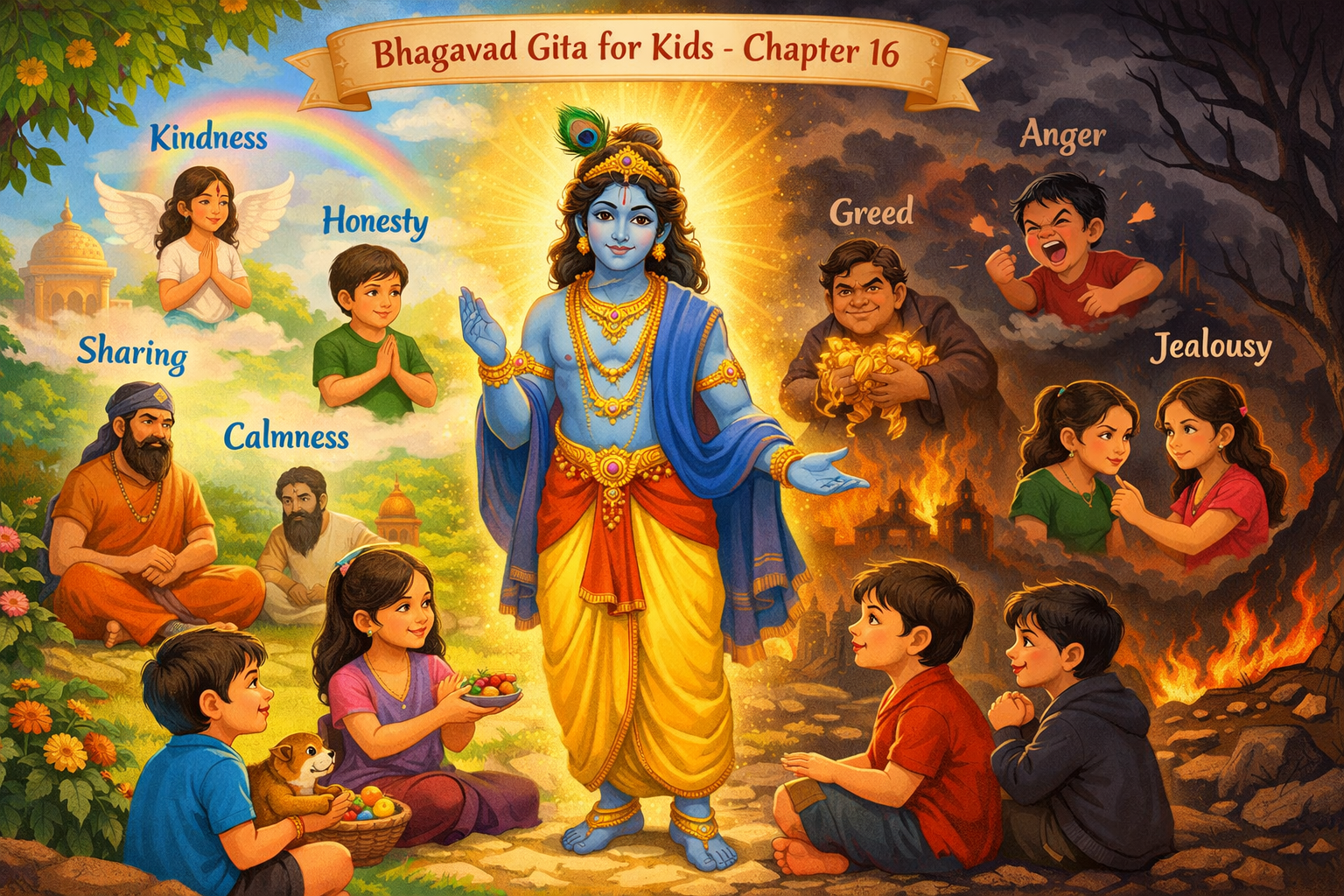
🌈 Introduction to Bhagavad Gita for Kids Chapter 16 | परिचय
English: In Bhagavad Gita for Kids Chapter 16, Krishna teaches children about good qualities and bad qualities. He explains how good habits make us happy and peaceful, while bad habits create problems.
Hindi: भगवद गीता बच्चों के लिए अध्याय 16 में कृष्ण बच्चों को अच्छे गुण और बुरे गुण समझाते हैं। अच्छे गुण जीवन को सुखी बनाते हैं और बुरे गुण परेशानी लाते हैं।
👉 Agar aapne Bhagavad Gita for Kids Chapter 15 padha hai, to yeh chapter aapko sahi aur galat ka fark samjhane mein madad karega.
📚 Table of Contents
✨ Divine and Demonic Qualities | दैवी और आसुरी गुण
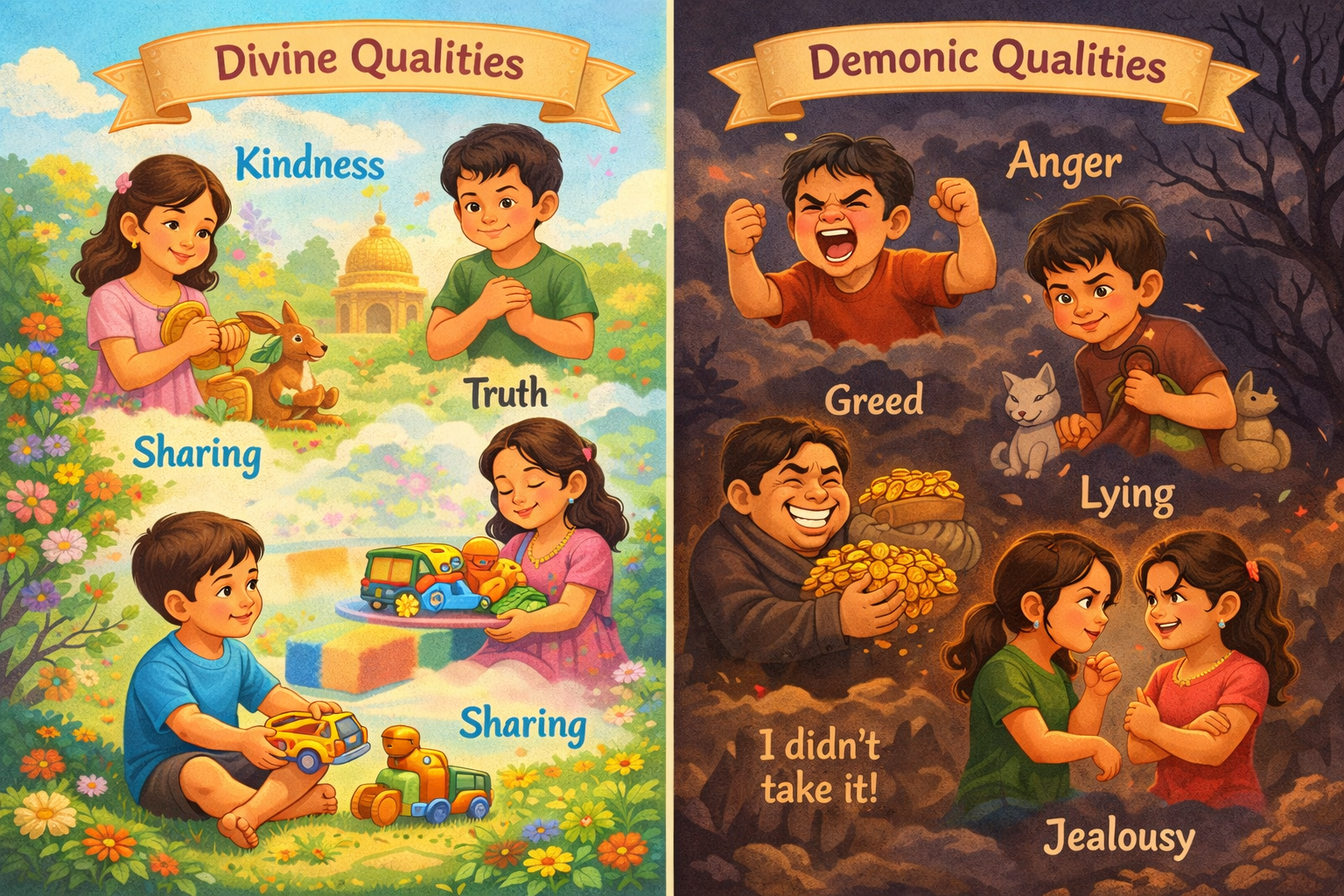
English: Krishna says some children follow divine qualities like kindness and truth, while others follow demonic qualities like anger and greed.
Hindi: कृष्ण कहते हैं कुछ लोग दैवी गुण अपनाते हैं और कुछ आसुरी गुण। दैवी गुण हमें अच्छा इंसान बनाते हैं।
📊 Good Habits vs Bad Habits
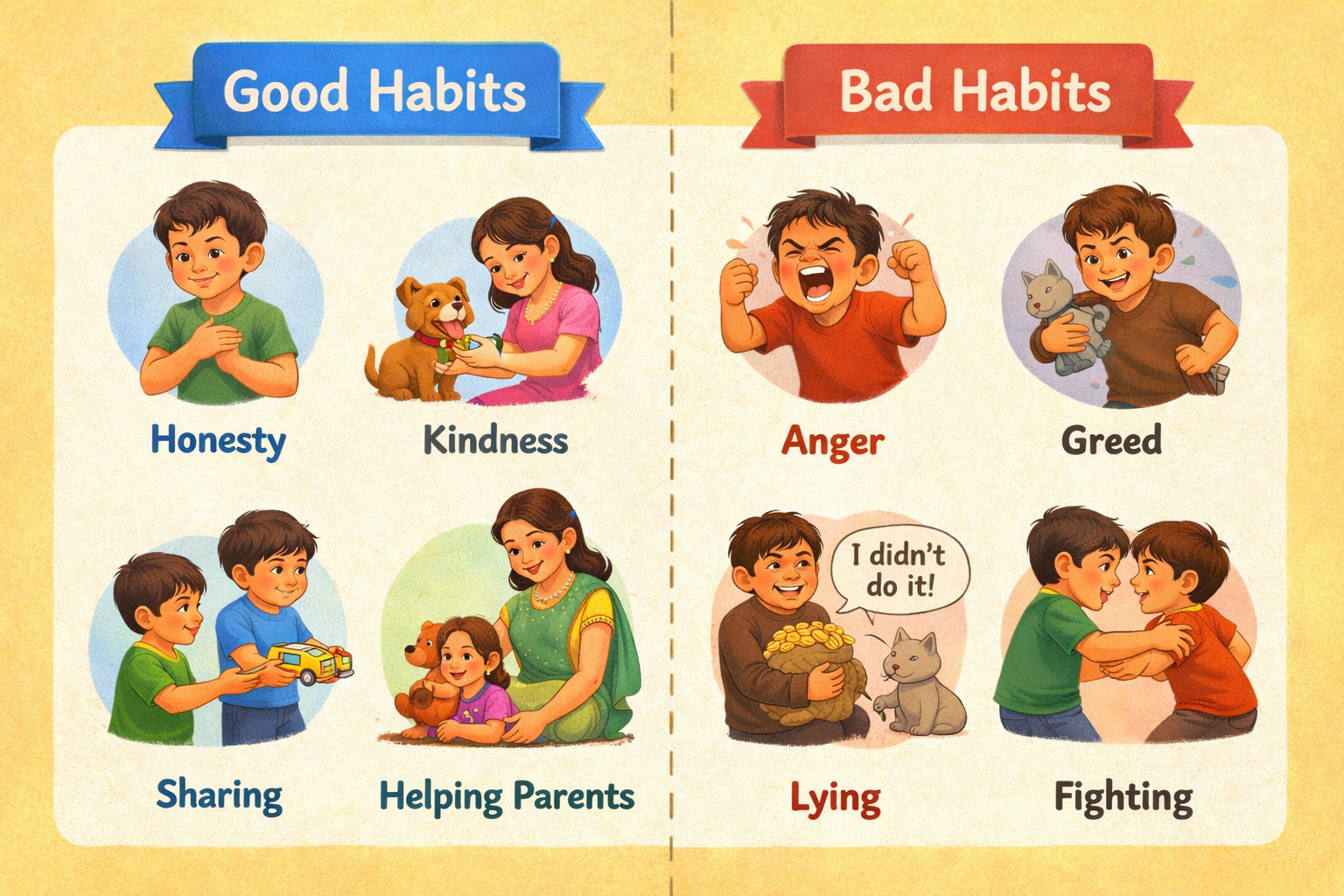
| Divine Qualities 😇 | Demonic Qualities 😈 |
|---|---|
| Truth | Lying |
| Kindness | Cruelty |
| Sharing | Greed |
| Calm Mind | Anger |
| Helping Others | Hurting Others |
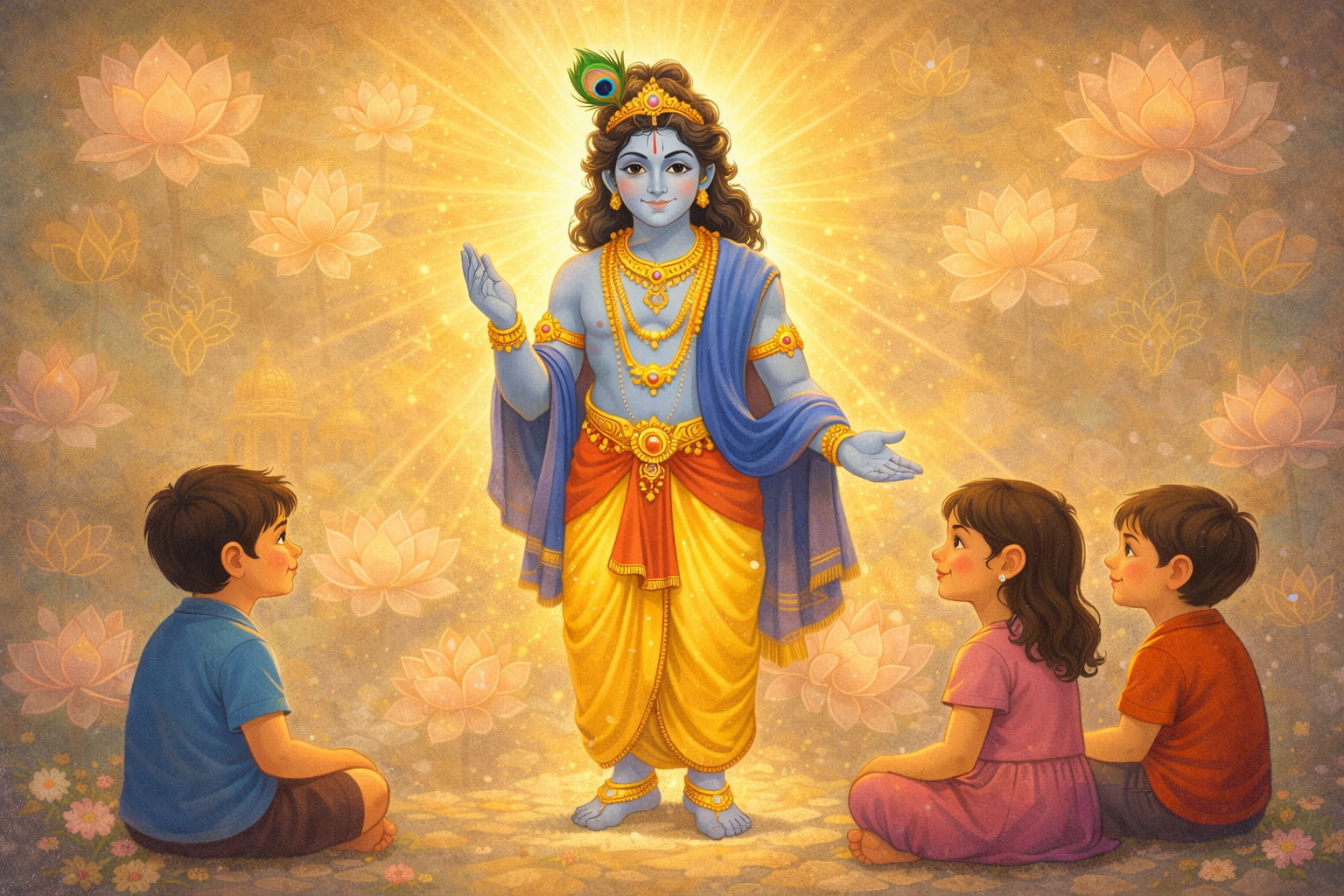
📜 Important Shlokas from Bhagavad Gita for Kids Chapter 16
Note: Shlokas are simplified for children. सुनो, समझो और अच्छे गुण अपनाओ! 😊
Shloka 16.1
Sanskrit: श्रीभगवानुवाच ।
अभयं सत्त्वसंशुद्धिर्ज्ञानयोगव्यवस्थितिः ।
दानं दमश्च यज्ञश्च स्वाध्यायस्तप आर्जवम् ॥
Easy Reading (Transliteration): Śrī-bhagavān uvāca
Abhayaṁ sattva-saṁśuddhir jñāna-yoga-vyavasthitiḥ
Dānaṁ damaś ca yajñaś ca svādhyāyas tapa ārjavam
English (Super Simple): Krishna says: Be brave (no fear!), keep your heart pure, stick to learning about God, give to others, control your wants, do good deeds, read holy books, work hard with focus, and always be honest — these are good (divine) qualities!
Hindi (बच्चों के लिए): कृष्ण कहते हैं: डरना बंद करो, मन साफ रखो, अच्छी बातें सीखते रहो, दूसरों को दो, अपनी इच्छाओं पर काबू रखो, अच्छे काम करो, अच्छी किताबें पढ़ो, मेहनत करो और ईमानदार रहो — ये अच्छे गुण हैं!
Kids Explanation: ये गुण तुम्हें सुपरहीरो जैसा मजबूत और खुश बनाते हैं। डरोगे नहीं, सबके साथ अच्छे रहोगे! 💪✨
Shloka 16.2
Sanskrit: अहिंसा सत्यमक्रोधस्त्यागः शान्तिरपैशुनम् ।
दया भूतेष्वलोलुप्त्वं मार्दवं ह्रीरचापलम् ॥
Transliteration: Ahiṁsā satyam akrodhas tyāgaḥ śāntir apaiśunam
Dayā bhūteṣv aloluptvaṁ mārdavaṁ hrīr acāpalam
English (Super Simple): Don’t hurt anyone, always tell the truth, don’t get angry, give up bad things, stay calm, don’t gossip, be kind to all animals and people, don’t be greedy, be gentle, feel shy of doing wrong, and don’t be naughty or restless — more good qualities!
Hindi: किसी को चोट मत पहुँचाओ, सच बोलो, गुस्सा मत करो, बुरे काम छोड़ो, शांत रहो, चुगली मत करो, सब पर दया करो, लालच मत करो, नरम दिल रहो, गलत करने से शरमाओ और चंचल मत बनो — ये भी अच्छे गुण हैं!
Kids Explanation: इन गुणों से तुम सबसे अच्छे दोस्त बन जाओगे। सब तुम्हें प्यार करेंगे और तुम्हारा मन हमेशा शांत रहेगा! 🥰🤝
Shloka 16.3
Sanskrit: तेजः क्षमा धृतिः शौचमद्रोहो नातिमानिता ।
भवन्ति सम्पदं दैवीमभिजातस्य भारत ॥
Transliteration: Tejaḥ kṣamā dhṛtiḥ śaucam adroho nātimānitā
Bhavanti sampadaṁ daivīm abhijātasya bhārata
English (Super Simple): Have inner power, forgive others, be patient, stay clean inside-out, don’t hate anyone, and don’t show off or be too proud — these make you a special person with divine qualities, O Arjuna!
Hindi: अंदर से ताकत, माफ करना, धैर्य रखना, साफ-सुथरा रहना, किसी से जलन न करना और घमंड न करना — ये गुण अच्छे इंसान को बहुत खास बनाते हैं!
Kids Explanation: जैसे राजकुमार या राजकुमारी — मजबूत, दयालु और humble! सब तुम्हारी इज्जत करेंगे। 👑❤️
Shloka 16.4
Sanskrit: दम्भो दर्पोऽभिमानश्च क्रोधः पारुष्यमेव च ।
अज्ञानं चाभिजातस्य पार्थ सम्पदमासुरीम् ॥
Transliteration: Dambho darpo ’bhimānaś ca krodhaḥ pāruṣyam eva ca
Ajñānaṁ cābhijātasya pārtha sampadam āsurīm
English (Super Simple): Showing off, being super proud, thinking you’re the best, getting angry fast, speaking rudely, and not knowing right from wrong — these are bad (demonic) qualities.
Hindi: दिखावा करना, बहुत घमंड करना, खुद को सबसे बड़ा समझना, जल्दी गुस्सा होना, कड़वी बातें करना और अच्छे-बुरे का पता न होना — ये बुरे गुण हैं!
Kids Explanation: ये गुण villain जैसे हैं — इन्हें अपनाने से दोस्त दूर हो जाते हैं, और life में दुख आता है। 😠🚫 Avoid them!
Shloka 16.5
Sanskrit: दैवी सम्पद्विमोक्षाय निबन्धायासुरी मता ।
मा शुचः सम्पदं दैवीमभिजातोऽसि पाण्डव ॥
Transliteration: Daivī sampad vimokṣāya nibandhāyāsurī matā
Mā śucaḥ sampadaṁ daivīm abhijāto ’si pāṇḍava
English (Super Simple): Good qualities free us and bring happiness forever. Bad qualities trap us in problems. Don’t worry, Arjuna — you already have good qualities inside you!
Hindi: अच्छे गुण हमें आज़ादी और सुख देते हैं। बुरे गुण हमें बाँधते हैं और परेशानी लाते हैं। अर्जुन, चिंता मत करो — तुम अच्छे गुणों वाले हो!
Kids Explanation: अच्छे गुण चुनो तो life एक happy adventure बन जाती है, जैसे superhero movie! 🌟🏆
Bonus Shloka 16.21 (Extra Important!)
Sanskrit: त्रिविधं नरकस्येदं द्वारं नाशनमात्मनः ।
कामः क्रोधस्तथा लोभस्तस्मादेतत्त्रयं त्यजेत् ॥
Transliteration: Tri-vidhaṁ narakasyedaṁ dvāraṁ nāśanam ātmanaḥ
Kāmaḥ krodhas tathā lobhas tasmād etat trayaṁ tyajet
English (Super Simple): Too much wanting (lust), anger, and greed — these three are doors to big trouble. Leave them far away!
Hindi: बहुत ज्यादा चाहत, गुस्सा और लालच — ये तीन दरवाजे दुख के हैं। इन्हें छोड़ दो!
Kids Explanation: गुस्सा आए तो गहरी साँस लो, लालच आए तो share करो। ये “bad monsters” हैं — इन्हें भगाओ और अच्छे बनो! 👹→✨
📖 Moral Story from Bhagavad Gita for Kids Chapter 16 | नैतिक कहानी
English Story:
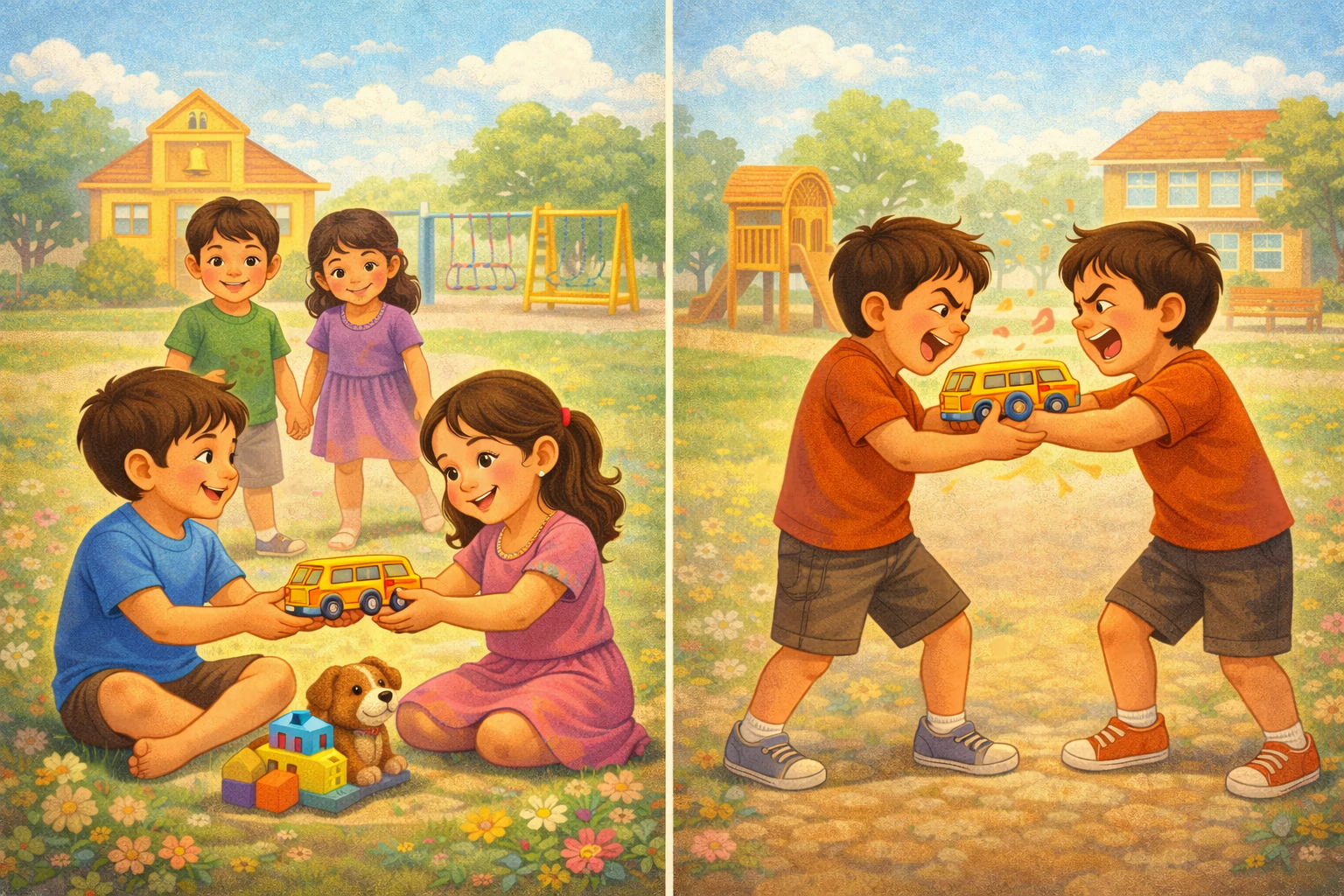
Once upon a time, in a small village, there were two friends, Rohan and Parth. Both had many toys, but they were very different in how they played. Rohan loved to share. Whenever a new toy arrived, he happily let his friends play with it. He would say, “Sharing makes everyone happy, and I feel good too!” Children from the whole village loved playing with Rohan because he was kind, honest, and helpful.
Parth, on the other hand, wanted all the toys for himself. If anyone came close, he would snatch the toy and get angry. He shouted, “These are mine! Don’t touch them!” Soon, the children stopped playing with Parth because he was mean and selfish.
One day, Krishna appeared and said, “See how Rohan’s divine qualities like kindness, patience, and sharing make him loved by everyone. Parth follows anger, greed, and jealousy—these are demonic qualities, and they only bring unhappiness. Choose good qualities, and your life will be full of love, friendship, and joy.”
From that day, Parth started practicing patience, sharing, and truthfulness. Slowly, children started loving him too, and he realized that divine qualities bring happiness not just to others, but also to himself.
Moral: Good habits and divine qualities make life joyful, peaceful, and meaningful.
Hindi Story:
एक समय की बात है, एक छोटे से गाँव में दो दोस्त थे — रोहन और पार्थ। दोनों के पास बहुत सारे खिलौने थे, लेकिन खेलने का तरीका अलग था। रोहन हमेशा बाँटता था। जब भी नया खिलौना आता, वह खुशी-खुशी अपने दोस्तों को खेलने देता। वह कहता, “बाँटने से सब खुश होते हैं, और मुझे भी अच्छा लगता है।” गाँव के सभी बच्चे रोहन के साथ खेलना पसंद करते थे क्योंकि वह दयालु, ईमानदार और मददगार था।
पार्थ, इसके विपरीत, अपने सारे खिलौने अकेले रखना चाहता था। अगर कोई पास आता, तो वह खिलौना छीन लेता और गुस्सा करता। वह चिल्लाता, “ये मेरा है! इसे मत छूओ!” जल्द ही, बच्चे पार्थ के साथ खेलना बंद कर देते क्योंकि वह क्रूर और स्वार्थी था।
एक दिन, कृष्ण प्रकट हुए और बोले, “देखो, कैसे रोहन के दैवी गुण जैसे दयालुता, धैर्य और बाँटना उसे सभी के प्रिय बनाते हैं। पार्थ क्रोध, लोभ और ईर्ष्या में फंसा है — ये आसुरी गुण हैं और केवल दुःख लाते हैं। अच्छे गुण अपनाओ, और जीवन प्यार, दोस्ती और आनंद से भरा रहेगा।”
उस दिन से, पार्थ ने धैर्य, बाँटना और सत्य बोलना शुरू किया। धीरे-धीरे बच्चे उसे भी पसंद करने लगे। उसे समझ में आया कि दैवी गुण न केवल दूसरों को खुश करते हैं, बल्कि खुद को भी सुख और संतोष देते हैं।
नैतिक शिक्षा: अच्छे गुण और दैवी व्यवहार जीवन को सुखी, शांत और सार्थक बनाते हैं।
👨👩👧 Parent Note
For Parents:
Bhagavad Gita for kids Chapter 16 is a wonderful tool to teach children emotional intelligence, self-control, and moral values. Instead of labeling children as “good” or “bad,” this chapter gently explains how habits shape behavior.
Encourage your child to reflect daily:
- Did I speak kindly today?
- Did I share with others?
- Did I control anger?
These small reflections help children naturally develop divine qualities in everyday life.
🎨 Activity + Quiz from Bhagavad Gita for kids Chapter 16
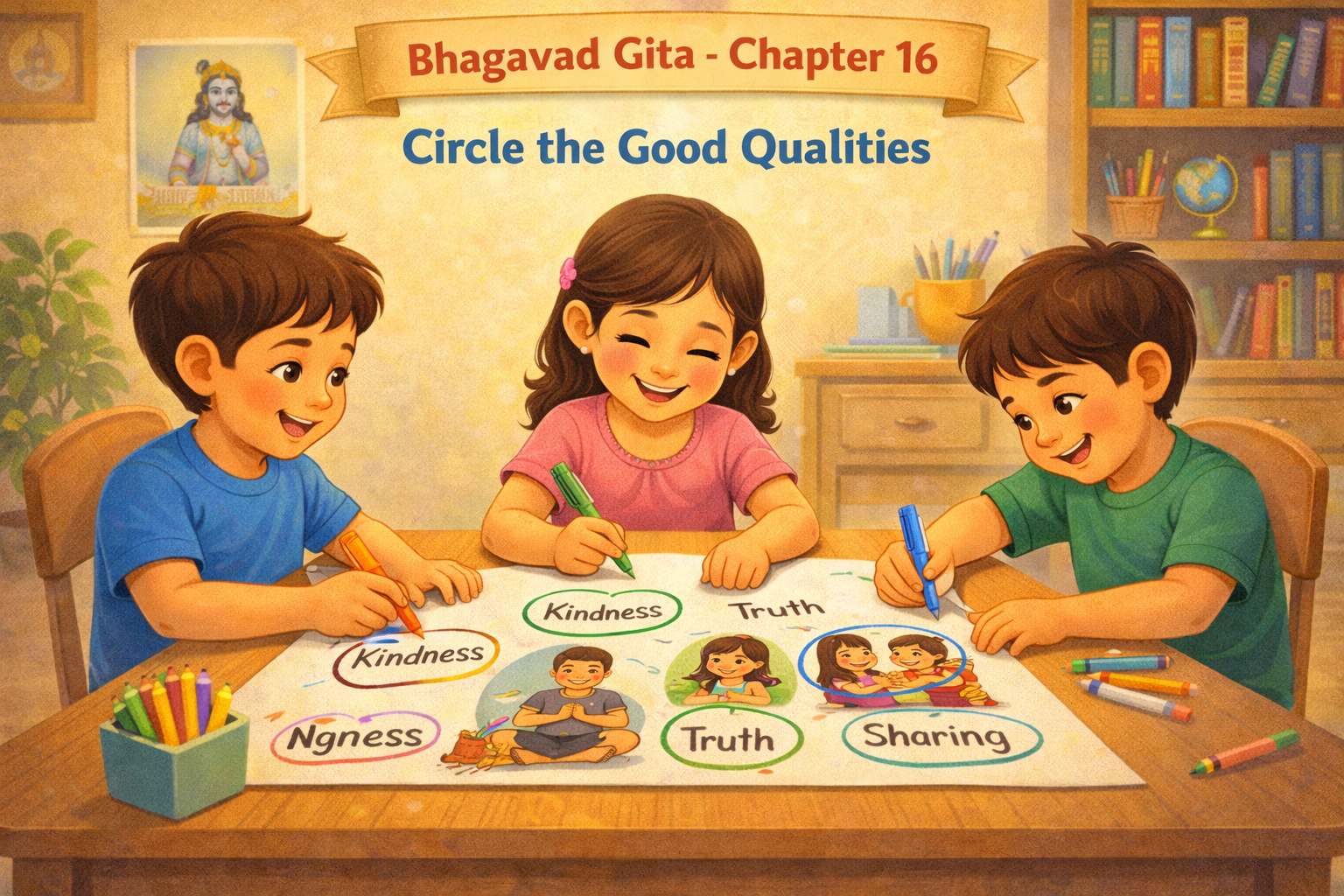
- Circle the good qualities you have.
- Which quality makes friends happy? 👉 Kindness ✅
- Should we follow anger or calmness? 👉 Calmness ✅
📝 Printable Worksheet – Good vs Bad Qualities
Instructions for Kids: Tick (✔️) the good habits you practice every day.
| Habit | Yes ✔️ | Needs Practice |
|---|---|---|
| I speak the truth | ||
| I share my things | ||
| I control my anger | ||
| I help others | ||
| I say sorry when wrong |
🖨️ Print Tip for Parents:
Use browser → Print → Save as PDF to download this worksheet.
FAQs – Bhagavad Gita for kids Chapter 16
What is Bhagavad Gita for kids Chapter 16?
Chapter 16 teaches children the difference between good qualities (divine) and bad qualities (demonic) in a simple and practical way.
Why should kids learn divine qualities?
Divine qualities like kindness, truth, and patience help children make friends, stay calm, and grow into good human beings.
What happens if children follow bad habits?
Bad habits like anger, greed, and lying create problems, loneliness, and unhappiness.
Is Bhagavad Gita suitable for young children?
Yes. When explained through stories and activities, Bhagavad Gita helps children learn values in a joyful way.
Bhagavad Gita for Kids Chapter 16 is not just a spiritual lesson but a life guide for children. By learning the difference between divine and demonic qualities early, kids develop strong values, emotional balance, and kindness that help them grow into good human beings.
🌟 Krishna’s Takeaway | कृष्ण का संदेश

English:
“Choose good qualities every day. They will guide you to happiness and peace.”
Hindi:
“हर दिन अच्छे गुण चुनो। वही तुम्हें सही रास्ता दिखाएंगे।”
🌐 Learn More (External Links)
📖 Read more chapters: Bhagavad Gita for Kids Series

Shweta Tripathi is the creator of Kahani Kadha, a children’s storytelling platform where Indian mythology, Bhagavad Gita lessons, and value-based stories are presented in a simple and engaging way for kids and families.
श्वेता त्रिपाठी Kahani Kadha की संस्थापक हैं, जहाँ बच्चों के लिए भारतीय संस्कृति, भगवद गीता के सरल पाठ और प्रेरणादायक कहानियाँ आसान भाषा में प्रस्तुत की जाती हैं।